About Us
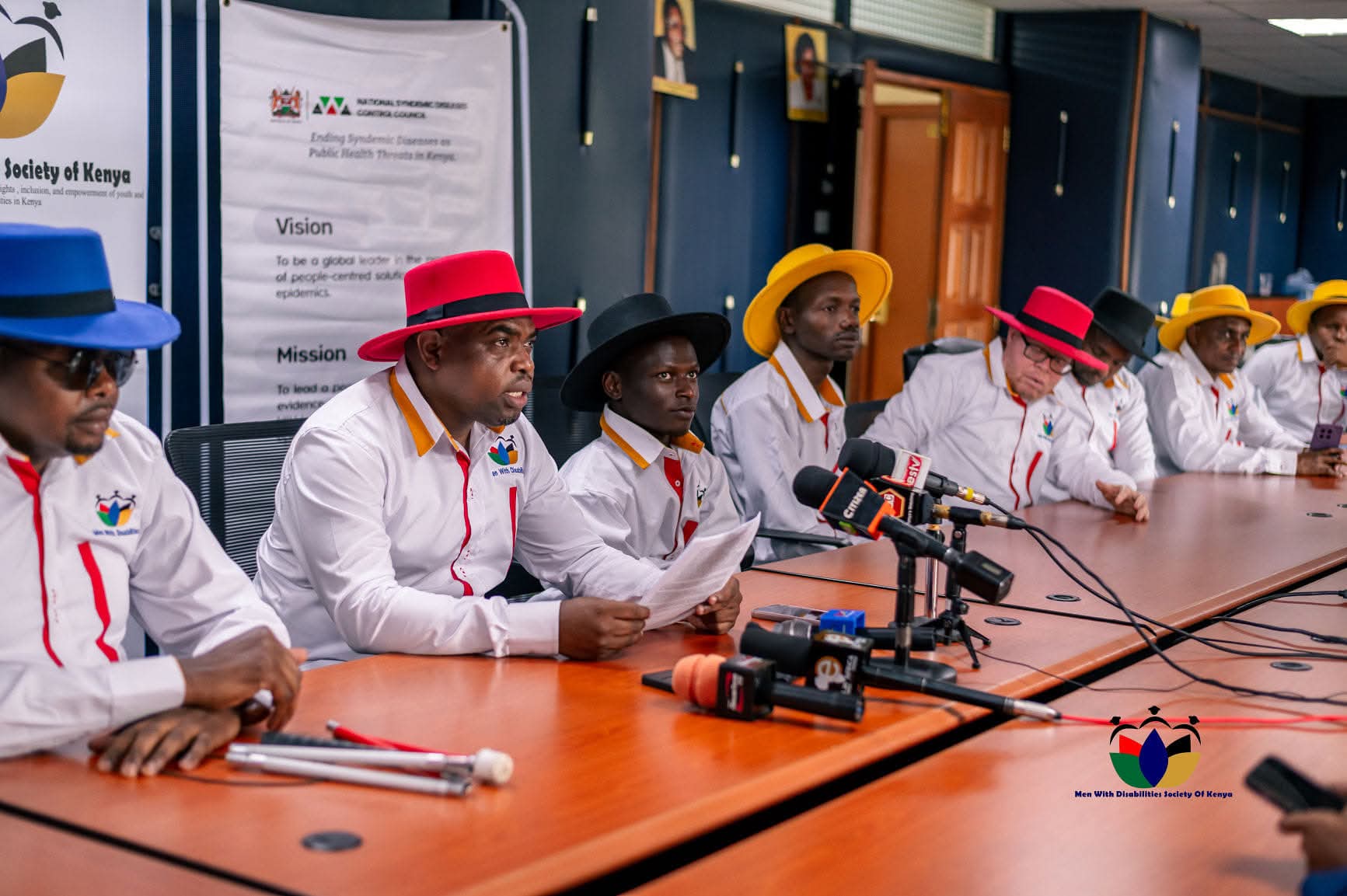
Men with Disabilities Society of Kenya (MDSK) is a National membership organization established to advance the rights, inclusion, empowerment, and dignity of boys and men with disabilities and their caregivers across Kenya. The organization works to address culture, social, economic, educational, health, and leadership barriers faced by boys and men with disabilities and their caregivers through advocacy, awareness creation, capacity strengthening, strategic partnerships, and community-based support initiatives.
MDSK is committed to promoting an inclusive and enabling society where boys and men with disabilities and their caregivers can fully participate in all aspects of life, access equal opportunities, exercise their rights, and achieve sustainable livelihoods and independence. The organization advocates for disability inclusion, accessible environments, equal participation, caregiving support systems, and protection from discrimination, stigma, exclusion, neglect, and violence.
The Society provides a safe and inclusive platform where boys and men with disabilities and their caregivers can voice their experiences, concerns, and aspirations, particularly on issues related to Gender-Based Violence (GBV), Sexual and Reproductive Health and Rights (SRHR), HIV/AIDS status, mental health, psychosocial wellbeing, economic empowerment, inclusive education, caregiving support, and leadership development. Through its programs, MDSK seeks to strengthen resilience, self advocacy, dignity, confidence, family support systems, and meaningful participation among boys and men with disabilities and their caregivers.
MDSK also promotes access to safe spaces, inclusive services, vocational and digital skills development, entrepreneurship opportunities, workplace reintegration, caregiving support services, and social protection mechanisms for persons who acquire disabilities during employment, education, or business engagement. The organization further advocates for accessible and disability-responsive systems, including healthcare, education, governance, employment, transport, and public infrastructure.
Recognizing the important role of caregivers and families, MDSK works to strengthen caregiver capacity, psychosocial support, inclusion in decision-making, and access to information and referral systems that improve the wellbeing and quality of life of boys and men with disabilities.
The organization actively engages Government agencies, Organizations of Persons with Disabilities (OPDs), Civil Society Organizations, development partners, academic institutions, the private sector, and communities to address systemic barriers and promote disability inclusive development, policy reform, accessibility, caregiving support, and social justice.
Through its work, MDSK aspires to build a society where boys and men with disabilities and their caregivers are recognized as equal contributors to national development and are empowered to live independently, participate meaningfully, and thrive with dignity.
Our Mission
Empower and protect boys and men with disabilities in Kenya by addressing GBV, sexual rights, mental health, and financial dependence while promoting inclusive leadership and integration into society.
Six Key Thematic Areas
Advance on Human Rights, Inclusion & Protection
- Human rights advocacy and legal protection
- Disability inclusion in policies and legislation
- GBV prevention and response systems
- Anti-stigma and anti-discrimination campaigns
- Family, relationships, parenthood, and caregiving support
- Safeguarding and protection mechanisms
Health & Psychosocial Wellbeing
- SRHR education and services
- Mental health awareness and psychosocial support
- STI/HIV prevention and response
- Accessible healthcare services
- Peer support and counselling programs
- Disability-responsive healthcare systems
- Inclusive communication in healthcare services
Inclusive Education & Access to Opportunities
- Inclusive education and lifelong learning
- School reintegration and retention
- Vocational and technical skills development
- Digital literacy and innovation
- Scholarships and mentorship opportunities
- Accessible learning materials and assistive technologies
- Disability-friendly educational infrastructure
- Career guidance and talent development
- Access to employment, leadership, and entrepreneurship opportunities
Economic Empowerment & Livelihoods
- Entrepreneurship and business development
- Vocational training and income generation
- Financial literacy and access to capital
- Micro-enterprises and self-employment
- Inclusive employment opportunities
- Accessible workplaces and reasonable accommodation
- Job retention and workplace reintegration
- Return-to-work and rehabilitation support programs
- Economic reintegration after acquiring disability
- Digital economic inclusion
- Agribusiness and sustainable livelihoods
- Assistive technologies for work and business continuity
Leadership & Governance
- Leadership development and mentorship
- Civic education and participation
- Representation in governance and policy spaces
- Inclusive public participation mechanisms
- Accessibility and universal design advocacy
- Barrier-free infrastructure and public spaces
- Disability-inclusive community development initiatives
Partnerships & Networking
- Strategic stakeholder engagement and collaboration
- Partnerships with Government, NGOs, OPDs, CSOs, and private sector
- Resource mobilization and joint programming
- Advocacy coalitions and alliance building
- Research, innovation, and knowledge sharing
- Community networking and peer engagement
- International and regional collaboration initiatives
- Partnerships for accessibility and assistive technologies
Our Strategic Objectives
Detailed goals driving each of our six thematic areas
Advance on Human Rights & Inclusion
Promote and protect the human rights, dignity, equality, and inclusion of boys and men with disabilities and their caregivers in line with the Constitution of Kenya, the Convention on the Rights of Persons with Disabilities (CRPD), and other international human rights frameworks.
Combat Gender-Based Violence (GBV), discrimination, stigma, neglect, and harmful practices affecting boys and men with disabilities and their caregivers through prevention, response, legal support, and protection mechanisms.
Promote relationships, family life, parenthood, caregiving support, and social inclusion with dignity, equality, and community support.
Health & Psychosocial Wellbeing
Enhance access to Sexual and Reproductive Health and Rights (SRHR), including comprehensive SRHR education, HIV/STI prevention, reproductive health services, and disability-inclusive healthcare systems.
Support mental health and psychosocial wellbeing through counselling services, peer support programs, trauma healing, psychosocial care, and stigma reduction initiatives.
Promote accessible, affordable, disability-responsive, and inclusive healthcare environments equipped with reasonable accommodation, assistive technologies, sign language interpretation, braille, and inclusive communication systems.
Inclusive Education & Access to Opportunities
Promote equitable access to quality, inclusive, accessible, and disability-responsive education and lifelong learning opportunities for boys and men with disabilities at all levels.
Advocate for inclusive learning environments that provide reasonable accommodation, accessible infrastructure, assistive technologies, inclusive teaching methods, braille materials, sign language support, digital learning tools, and disability-friendly educational policies.
Support school reintegration, vocational training, digital literacy, technical skills development, mentorship, scholarships, and talent development programs that enhance personal growth, independence, leadership, and employability.
Enhance access to social, economic, educational, leadership, innovation, employment, and entrepreneurship opportunities by removing systemic barriers and promoting equal participation and inclusion in all sectors of society.
Economic Empowerment & Livelihoods
Foster economic empowerment, self-reliance, and financial independence of boys and men with disabilities through vocational skills training, entrepreneurship support, financial literacy, digital inclusion, and access to sustainable livelihood opportunities.
Promote inclusive and accessible workplaces, equal employment opportunities, reasonable accommodation, disability-inclusive labor policies, and access to assistive technologies that enhance productivity and economic participation.
Support job retention and workplace reintegration for persons who acquire disabilities while in employment, business, or informal work settings by advocating for reasonable accommodation, workplace adjustments, rehabilitation support, reskilling, return-to-work programs, social protection, and non-discriminatory employment practices.
Promote economic reintegration and business continuity support for entrepreneurs and workers who acquire disabilities by facilitating access to adaptive technologies, inclusive financing, mentorship, vocational reorientation, and accessible work environments.
Support income-generating activities, micro-enterprises, agribusiness, hawking, innovation, and access to capital and financial services for boys and men with disabilities.
Leadership & Governance
Build leadership capacity, representation, and meaningful participation of boys and men with disabilities and their caregivers in governance, policy development, civic engagement, and decision-making processes at community, county, national, regional, and international levels.
Promote accessible and inclusive governance spaces, public participation forums, communication systems, and civic processes that ensure equal participation of boys and men with disabilities and their caregivers.
Strengthen advocacy and representation in public institutions, disability councils, policy platforms, and leadership structures.
Promote accessible and enabling environments through advocacy for universal design, barrier-free infrastructure, inclusive transport systems, accessible public spaces, assistive technologies, and disability-inclusive community development initiatives.
Partnerships & Networking
Promote strategic partnerships and collaborative engagement with Government agencies, Organizations of Persons with Disabilities (OPDs), NGOs, Civil Society Organizations, development partners, private sector actors, academic institutions, media, and community stakeholders to advance disability inclusion and sustainable development.
Strengthen networking, coordination, and joint programming initiatives that enhance advocacy, resource mobilization, knowledge sharing, innovation, and collective action for disability rights and inclusion.
Foster partnerships that promote inclusive education, accessible healthcare, economic empowerment, leadership development, accessibility, assistive technologies, research, and community-based inclusion programs.
Build local, national, regional, and international alliances that amplify the voices, visibility, and participation of boys and men with disabilities and their caregivers in development and humanitarian initiatives.